AI and Advancing Healthcare: Why Are We Still So Sick?
We’re living in one of the most advanced eras of healthcare in history.
We can replace joints.
We can transplant hearts.
We can use artificial intelligence to analyze patterns in seconds.
And yet… something doesn’t add up.
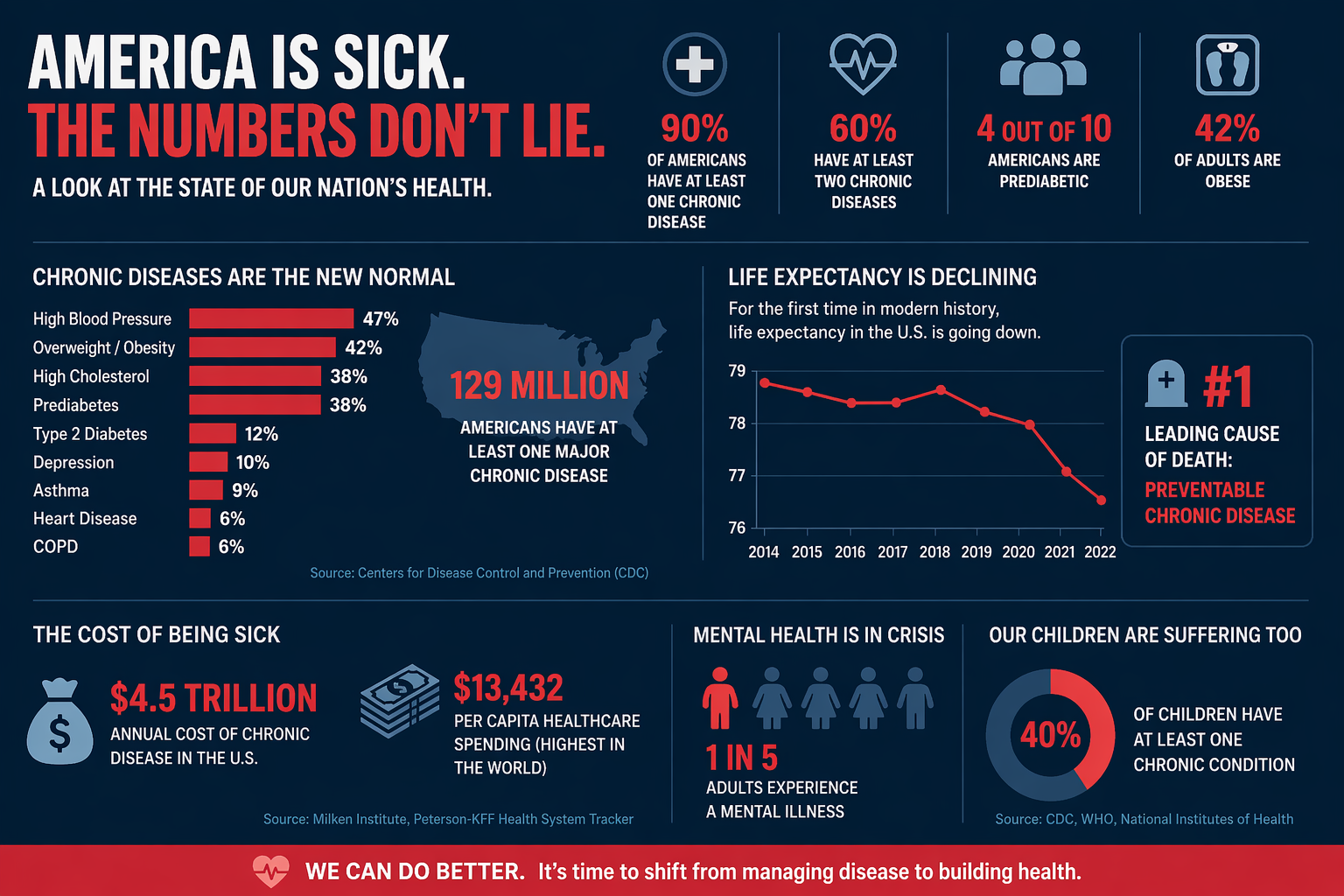
Chronic illness is rising.
Burnout is everywhere.
Anxiety and disconnection feel more common than ever.
We’re spending more on healthcare than we ever have before…
but are we actually becoming healthier?
It raises an important question:
Have we gotten really good at intervention—but lost trust in the body itself?
Over 100 Years Ago…
Chiropractic began with a simple but bold idea: The power that made the body heals the body.
Pause with that.
Not the power in a pill.
Not the power in a procedure.
But the power that made the body.
What if the future of healthcare depends not on overriding the body, but on honoring it?
Our current system is extraordinary in crisis care. It saves lives in emergencies. It manages trauma.
But it was largely built on a model that sees the body as prone to breakdown — something to fix, suppress, or manage.
The founder of Chiropractic, B.J. Palmer reminds us, “Chiropractic is founded upon different principles than medicine,”
Those principles center on innate intelligence — the understanding that life is self-organizing, self-healing, and self-regulating when interference is removed.
“Life is the expression of tone.”
Tone — the harmonious communication of the nervous system. The rhythm of health expressed through structure and function aligned.
What if healthcare shifted from chasing symptoms to cultivating tone?
The Body is Intelligent
Technology does not threaten this philosophy. In fact, it can elevate it — if used wisely.
Advanced imaging, neurological research, wearable biometrics — these tools can help us understand adaptation in ways we never could have imagined.
But tools must serve principle.
The danger is not innovation.
The danger is forgetting why we innovate.
If healthcare continues to be about managing disease, we will always be overwhelmed by it.
But if healthcare becomes about cultivating expression — physical, emotional, neurological — then we shift from reaction to creation.
The Next Era of Healthcare
Chiropractors stand in a unique position in this evolution.
Not as competitors in a crowded system.
But as guardians of a principle.
A reminder that the spine houses possibility.
That the nervous system coordinates life.
That removing interference allows the body to do what it was designed to do.
The next era of healthcare is not built in hospitals or laboratories.
It will be built in conversations.
In connection
In communities.
In places like this — where people dare to think differently.
“The power that made the body heals the body.”
Those words are not outdated philosophy.
They are unfinished revolution.
The next era of healthcare will be shaped by vision.
Vision that sees health not as the absence of disease, but the presence of vitality.
So I ask you:
Will you live a life of managing symptoms?
Or become an architect of your own resilience?
Will you depend on the limitations of a reactive system?
Or will you trust the intelligence of life itself?