
What’s the Difference Between Chiropractic, Physical Therapy, Massage, and Stretching?
This is one of the most common questions we get.
Because from the outside, they can all look similar.
They all involve movement.
They all involve hands-on care.
They can all help you feel better.
So what’s actually different?
Let’s break it down!



Different Goals
Each of these approaches serves a purpose. But they are not trying to accomplish the same thing.
Here’s the simple breakdown:
Stretching = improving flexibility within the range you can already access
Massage = working on soft tissue (muscles, fascia) to reduce tension and improve circulation
Physical Therapy = strengthening, retraining movement patterns, and rehabilitating injured tissue
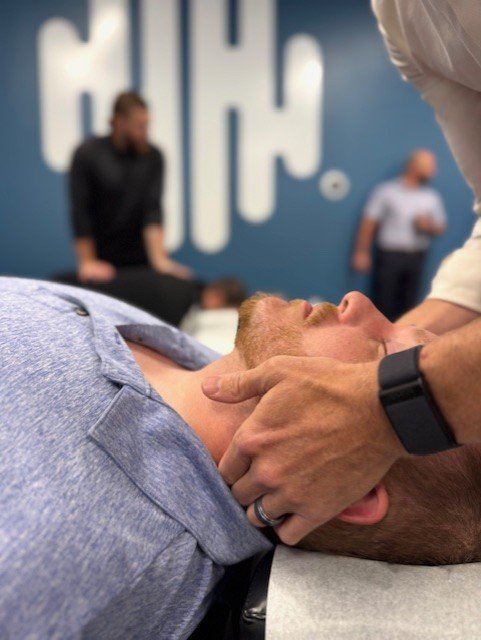
Chiropractic = restoring joint mechanics and stimulating the nervous system to improve how your body functions as a whole
All are hands on care. But they are not interchangeable or mutually exclusive.
Correct the Foundation Before You Build on It
Muscles don’t “randomly” misbehave. They respond to the nervous system.
Massage can reduce muscle tension beautifully, and of course, feels great.
Physical therapy can rebuild strength and retrain muscle patterns.
Stretching can build and maintain muscle flexibility.
BUT…
Your brain is smart. If a joint isn’t moving properly, it will increase muscle tone around that area to protect it. What feels like “tightness” is your body stabilizing a mechanical problem.
Until the joint movement is restored, compensation will continue.
As long as compensation continues, tension will return.
Until the nervous system receives accurate joint input, your movement patterns will never fully normalize.
You can strengthen around dysfunction.
You can stretch around dysfunction.
You can relax around dysfunction.
But you cannot bypass it.
Chiropractic restores the joint mechanics first. That creates clean input to the brain. And when the brain gets better input, the body organizes itself better.
In other words, you can find several ways to reinforce a house that has structural damage, but you should address the foundation before you build on it.
The Hidden Layers of Joint Movement
To understand the difference at an anatomical level, every joint in your body has:
Active Range of Motion – how far you can move it on your own (stretching)
Passive Range of Motion – how far it can move when assisted (PT)
Joints also have something called:
The Elastic Barrier – the point where resistance increases
The Anatomical Barrier – the absolute limit your body will allow before injury
And between those two is a small, controlled space called the paraphysiological space: this is where a chiropractic adjustment happens.
When we perform an adjustment, we apply a precise, controlled force, in a specific direction and at a specific speed, to briefly enter that range between the elastic and anatomical barrier. That brief, specific input stimulates the sensory receptors inside the joint capsule — receptors that communicate directly with your brain about position, load, and movement.
When those receptors fire clearly again, your brain gets better information.
And better information changes how your body organizes posture, muscle tone, balance, stress response, and recovery.
Stretching works within the range you can already access.
Massage works on the surrounding tissue.
But an adjustment restores motion at the joint itself — and in doing so, updates the nervous system.
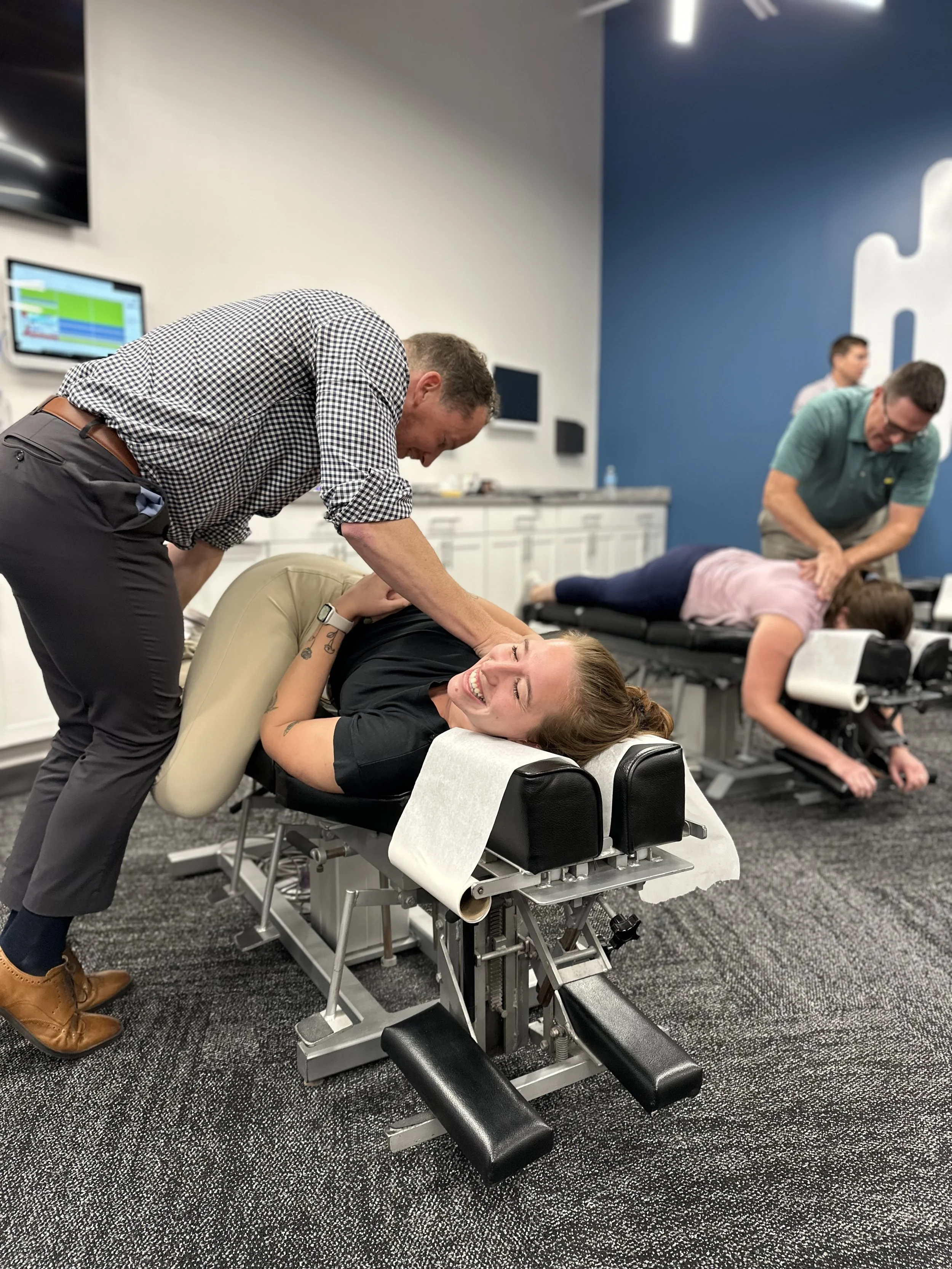
If you’re like many of our patients, you tried everything before you found us.
Stretching helps. Massage feels good. PT worked for a while. You get some relief. And then… it comes back.
If you’re ready for real, lasting change, it’s time to rebuild the foundation.
Let’s restore the movement your spine was designed for and get your brain and body working on the same team again.